It is TILE device so you should use tile version of routeros.
You are obviously on ROS 6 version so 6.49.21 is the latest version released on 2026-09-03 that should include vulnerability fixes.
You may try to upgrade to ROS 7, either manualy or by selecting "upgrade" channel in auto upgrade, but you should first make a backup of your configuration, check after upgrade if everything is working as it should and be prepared to go back (netinstall) if it does not...
And do not panic and do something that will render your network inoperable.
Thanks for confirming. Is there an ETA for the fixed release? Since DHCPv6-PD is completely broken for some PPPoE users on 7.23.4, it would be helpful to know whether the fix is expected today or in the next few days.
Why do you wait so long to announce this important upgrade on X (Twitter) channel mikrotik_build?
I know several people who follow that and who now miss this important announcement...
we do not operate X accounts, it is probably a user who runs it. The only official release robot on social media is here: MikroTik releases (@version@mikrotik.social) - mikrotik.social
Will you be exposed if all services SSL/API/telnet/winbox/ftp are configured to listen on a MGMT vrf only accesible by internal IPs?
No! Well of course if you trust those internal IPs.
Client or server
It's on PPPoE Client. Seems like Mikrotik is sending PADI but does not receive PADO (what does not makes sense as it works completely OK on 7.21.5) or MT just does not accept/process it correctly.
I will need to run packet capture to see what's going on there (thanks to Mikrotik support for finding this strange behavior).
Just a side note, I don't believe that BRAS will not send PADO when using 7.23.4, because without any change (I mean same config) everything works on 7.21.5 without any issue.
what kind of changes can anyone explain
Ukraine WiFi frequencies were tuned to latest regulation.
Is this isolated to 1009 or any tile arch? Hmmmm this is not good ahhaha anyone can confirm this?
That is what I recognize as being a network problem. There are distribution networks that "snoop" PPPoE and ignore PADI when they think the connection is already open. There is a rather long timeout (like 3 minutes or more) before they consider the connection gone, and PADI re-triggers that timeout. So the connection never establishes unless you disable the PPPoE for a couple of minutes and then re-enable it.
The problem would be avoided by sending PADT but RouterOS does not do that. The ISP-supplied routers usually send a couple of PADI and then a PADT, wait some time, then try PADI again. They do not see the issue.
Upgrading 7.21.5 to 7.23.4 takes our customers to that unacceptable thing of circuit-id/remote-id in hexadecimal.
So, no! It will not be upgraded!
You could just fixed vulnerability in SSH and released 7.1.6.
Lets wait until 7.25 become long-term.
In your opinion 7.21 to 7.25 upgrade will be easier? There will be even more changes.
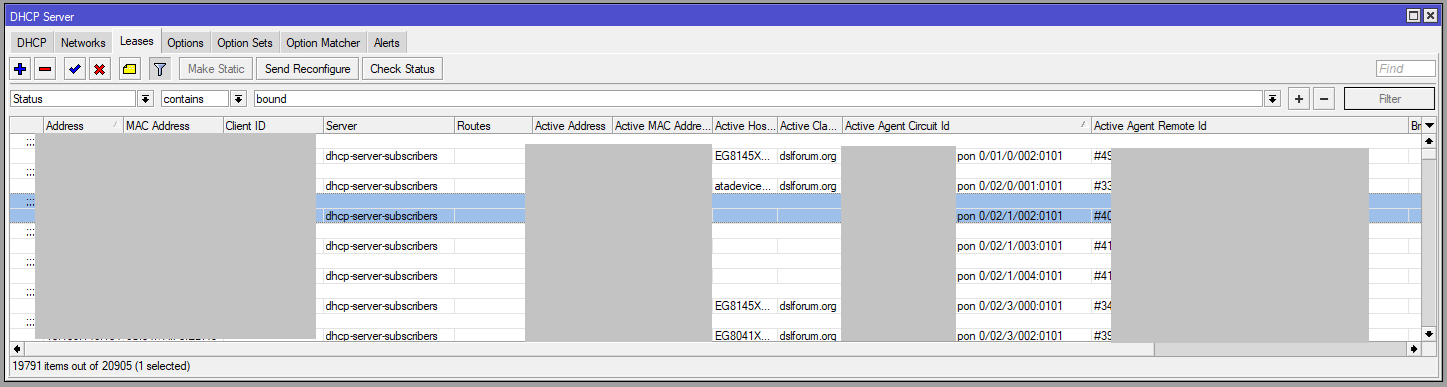
We upgraded to v7.23.4 LTS. We normally are much more conservative with upgrades, but this one sounded mandatory.
On RouterOS 7.23.4, the DHCPv6 client repeatedly receives valid Advertise responses containing a delegated /56 prefix but never sends a Request, remaining stuck at “searching” without creating the configured IPv6 pool.
We can only use LTS versions, please fix as soon as possible.
Yes, as seen above, DHCPv6 issue is known and a fix is going to be released in less than an hour.
Edit: DHCPv6 fix has been released now
man these guys at mikrotik are proactive! i love this company.
7.23.5 ?
Now I have to keep my promise and update all devices to 7.23.5...
Done!