From the photos posted by Ca6ko on the referenced thread, the thickness of the "thermal goo" seems (to me) way too much, when compared on what is used on (say) PC CPU's or graphical cards CPU's.
Particularly this one:
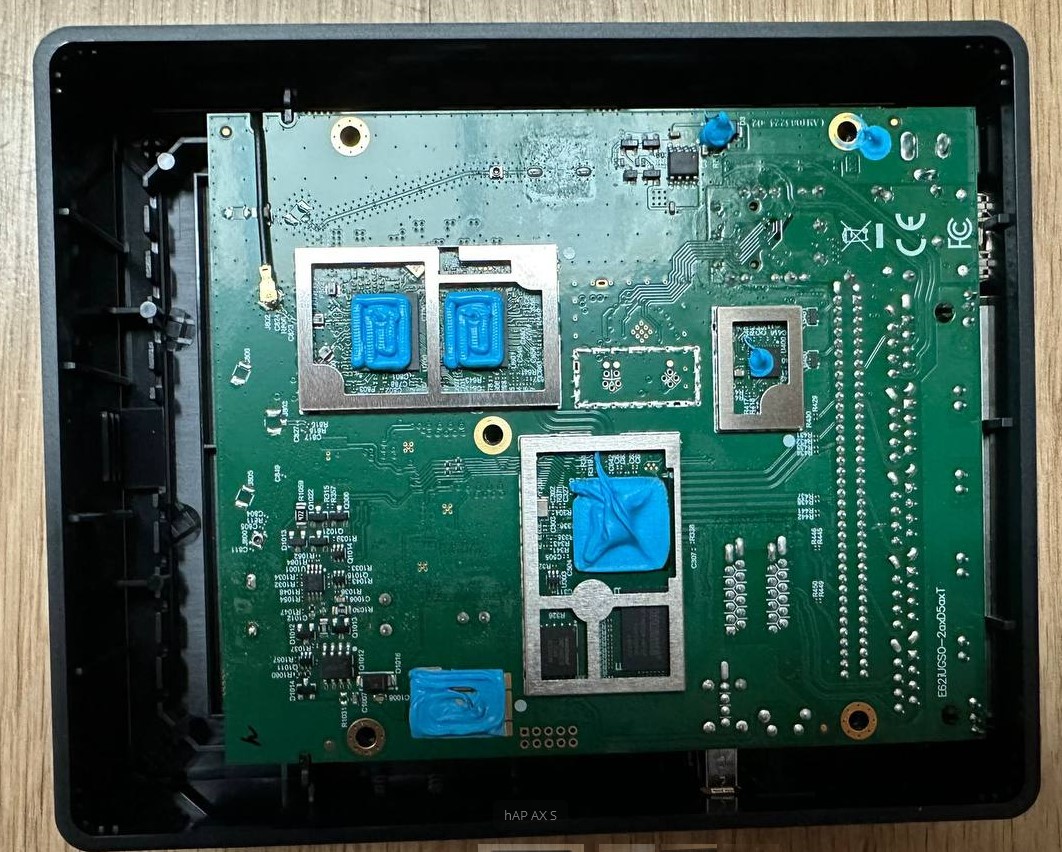
We are talking of (seemingly) millimeter(s) vs. tenth(s) of millimeter (or even less).
The "disalignment" of the various components due to the surface tension you mention is anyway in the order of magnitude of tenth(s) of millimeter, not more.
But, given the position of the seven points of contact (5 main ones + 2 smaller ones) and of the five screws, I wouldn't be surprised if the board soft of pivots along a north/norteast to south/soutwest axis and the top left screw is the only thing that can force the contact between the heatsink plate and the two (I presume RF) chips, so an under torqued top left screw (or an over torqued central one) is IMHO likely to cause a less-than-optimal contact.
Getting the proper thermal exchange looks to me as an engineering nightmare.
The "thermal goo" seems a lot like silicone putty, like TG4040 pr TG6060:
https://www.tglobalcorp.com/products-detail/tg4040-putty/
or S-Putty/H-putty2:
https://lipoly.com/en/product/liquid-gap-fillers/thermal-putty/s-putty/
But this is only speculation, there might be other explanations, not connected to thermal issues.