For that kind of setup wifi signal usually reaches up to 30-50 meters
@mkx, I didn’t want to react at first, but you have the same remarks as I wanted to make.
Since 802.11n reflections on walls,ceiling and floor in the same room do help the signal to travel further. (before ‘n’ they canceled each other). So the range should be somewhat better than free field outdoor. MT will see many bars on their mobile devices walking around. The Audience has strong radio’s (eg compared to hAP ac3), so the full allowed EIRP will be reached on all MCS.
The antenna gain is not ‘that’ strong, 4.5dBi, but for indoor use that is quite good. The antenna gain is important for the received signal from the client. (as the EIRP rule will cap any extra TXpower of the AP)
But the unbalance between TXpower of the AP and TX power of the station might be greater here than one wants, giving trouble to connect, even with enough bars on the wifi symbol.
Don’t know if MT used the 4x4 radio (EIRP up to 27dBm) or the 2x2 radio (EIRP up to 23dBm) in Latvia
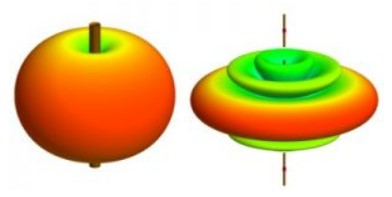
AFAIK MT has not published the RF radiation pattern of the Audience. (https://twitter.com/mikrotik_com/status/1235903898424160256) The possibility is there that it is maximised in the horizontal plane, and reduced verically. Lower end AP with MT have an almost spherical RF pattern, something that works very well for small fast cells and for passing walls, floors and ceilings. If the Audience has a pattern like on the right, how would one have to position the device for a 4 floor building ? That RF pattern like on the right could even explain the outcome in http://forum.mikrotik.com/t/single-router-wifi-coverage-ac2-vs-ac3-vs-audience/150185/1
And to refer to the title of this thread: mind the reflector in the “cAP XL ac”. Where does its 3dBi extra gain come from ???