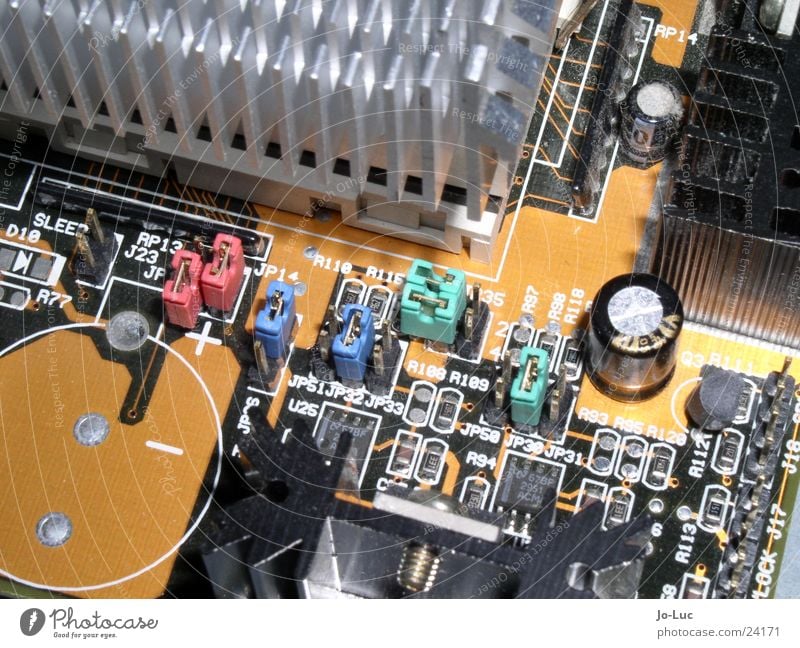
TLDR version - phisically there are 2 cores on the chip, but manufacturer detected issues with 2nd core, and sold it as cheaper single core part to MikroTik. Probably it was not locked in any way, so it just showed up when you solder all pins. so it needed to be disabled in software.
Confirmed here: I haven’t seen a bounce in the 1 day 18 hrs this switch has been up on 7.4beta2. Before, I’d see it happen several times a day, staying down for about a second each time.
I’m using generic modules, with a 10GBASE-SR one down to an RB4011 on one leg and a 1000BASE-SX one down to a hEX PoE on the other leg.
I’m not sure it’s improved anything performance-wise, but it is nice to have that noise out of my logs now.
Interesting idea. It would explain several observed things. Although one thing strikes me as a problem to this idea: It wouldn’t be very practical if the deactivation of a given core was dependent on a given pin not being soldered. Imagine the logistical nightmare, to find out if (say) pin 2 or 3 should be left alone - since the problematic core could be the 0 or 1.
By the way, just remembered: The CRS326 use the very same CPU. Are they showing two cores on RoS V7.x? Are they affected by the same problem?
i saw that many people have the same experience and i don’t know how to make mikrotik listen.
With this issue, we cannot upgrade the current production router with version 7.x,
well we are in the world of chip shortage now, so manufactuers are soldering anyting on the boards that they actually get. It wouldn’t suprize me that some part of these devices have actual 2 core CPU on them, just to be able to produce them.
True. But this practice isn’t new - far from it. It stands to reason that the CPU would have a simple way to be shipped with one of this cores disabled at factory. Better to the manufacturer (no one can cheap out and buy one core to use two) and better to the buyer (easier to use, just put it on the board and the chip says it only has one core).
Just like it’s done on the x86 world: Intel or AMD disable the core at the factory, and sell it this way. The consumer just puts it on the motherboard, and the CPU tells the number of cores it has. Zero effort on the consumer part.
Frequency differences on CPU is the same (at least, used to be).
You really think they MAKE them for a certain frequency within the same family ?
No way.
One production process and then some testing to see where you can get. If there are not enough for the lower frequencies, they take the higher ones and put a lower label on it.
Assume that you not remember jumpering motherboards. Setting speeds, dividers/multipliers, cache sizes … Freedy Kruger wasn’t the most frightening nightmare those times
Hello thanks mikrotik for implementing support of VRF for PPP , this is a big step for us , as we use to use it with cisco and Juniper
however could you work on support of BGP inside VRF, is it the only thing that miss , if we want to replace about thousand old cisco / juniper router to Mikrotik device
regards
by the way I tried .default-originate=never or .default-originate=if-installed without success
Don’t You talk to me about jumpering motherboards - I have had my fair share of IRQs and addresses with 386s…
But my point stands: When You have two cores, and one of them dead, it’s far easier to just disable it at factory testing. Can You imagine otherwise?
“No, no! This is the item number 378917835644 - it has the core 1 dead! The one with the core 0 dead is the 378917835643! Move this jumper C1 to the 1-2 position!”
The point is, that motherboard COULD has been designed for cheaper only one-core factory enabled chip not needing soldering/grounding/powering particular pins as it was not needed for such processors. IF, watch the “IF”, MT mounts two core enabled chips as they are the only accessible then the additional core is recognized as it is not disabled by in silicon nor by proper pin settings. The untested or problematic second core has to be disabled in software or ROS has to be tested/extended for the second core use.
In Poland we say “If you don’t own what you like, then you must like what you possess.” what in English is " beggars can’t be choosers"
*) container - added support for running Docker ™ containers on ARM, ARM64 and x86;
*) defconf - fixed default configuration loading on devices with WifiWave2 package;
*) dhcp-relay - fixed DHCPv6 relay forward and reply creation (introduced in v7.1.3);
*) dhcp-server - change “vendor-class-id” matcher to generic option matcher;
*) dot1x - fixed “undo” command for server instances;
*) l2tp - improved stability when establishing l2tp-ether connection (introduced in v7.3);
*) leds - fixed GPS LED configuration on LtAP LTE kit;
*) leds - fixed LTE signal strength LED configuration on LHGG LTE kit;
*) leds - fixed LTE signal strength LED configuration on LtAP LTE kit;
*) lte - added AT chat support for Dell dw5821e modem;
*) lte - fixed LTE interface running state after modem reconnection;
*) mqtt - fixed socket error handling;
*) netwatch - added support for more advanced probing;
*) ovpn - fixed “called-station-id” RADIUS attribute value for OVPN server;
*) ppp - do not fail connection when trying to add existing IP address to address list;
*) ppp - log warning message when remote IP address can not be added;
*) route - changed “mode” setting to “exclude” for group management protocol (CLI only);
*) route - made export run faster on tables with a large number of dynamic routes;
*) routing-filter - added origin matcher to match for example routes of a specific OSPF instance;
*) routing-filter - made “do-jump” work in select rules;
*) ssh - fixed host key generation (introduced in v7.3);
*) switch - fixed multicast flooding when HW offloaded bridge port gets disabled;
*) system - fixed configuration reset with “run-after-reset” with file stored on ramdisk;
*) upgrade - improved RouterOS upgrade stability with attached USB modem on MIPSBE, SMIPS and MMIPS devices;
*) w60g - improved interface initialization after being inactive for a while;
*) wifiwave2 - added initial support for roaming (802.11r) between local AP interfaces;
*) winbox - fixed filename dropdown value filtering;
*) x86 - fixed Broadcom NIC support;
Hi.
Is this fix from 7.3.1 also included in this beta ??
*) wifiwave2 - fixed WPA3-PSK authentication incompatibility with certain vendor and model devices;
is this
*) route - made export run faster on tables with a large number of dynamic routes;
helping about support #[SUP-83756]: ccr2216 with 3xBGP_fullroute not able to sort route when rpki is checked??