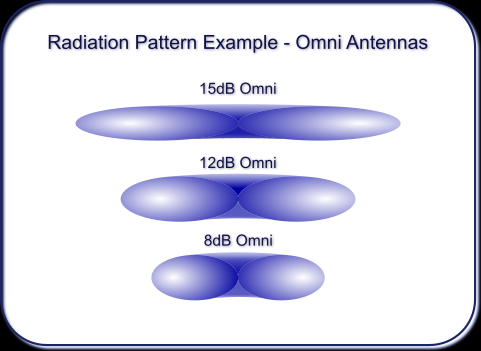
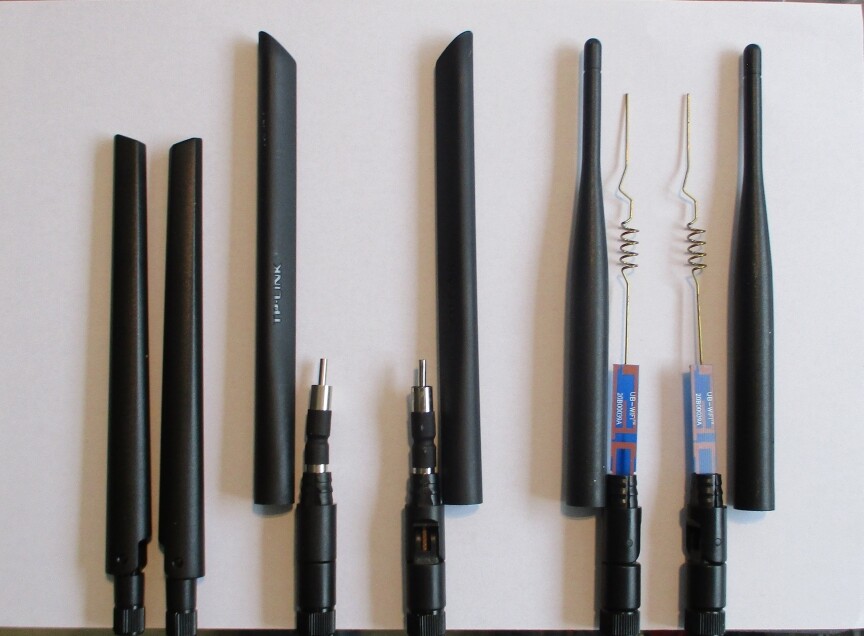
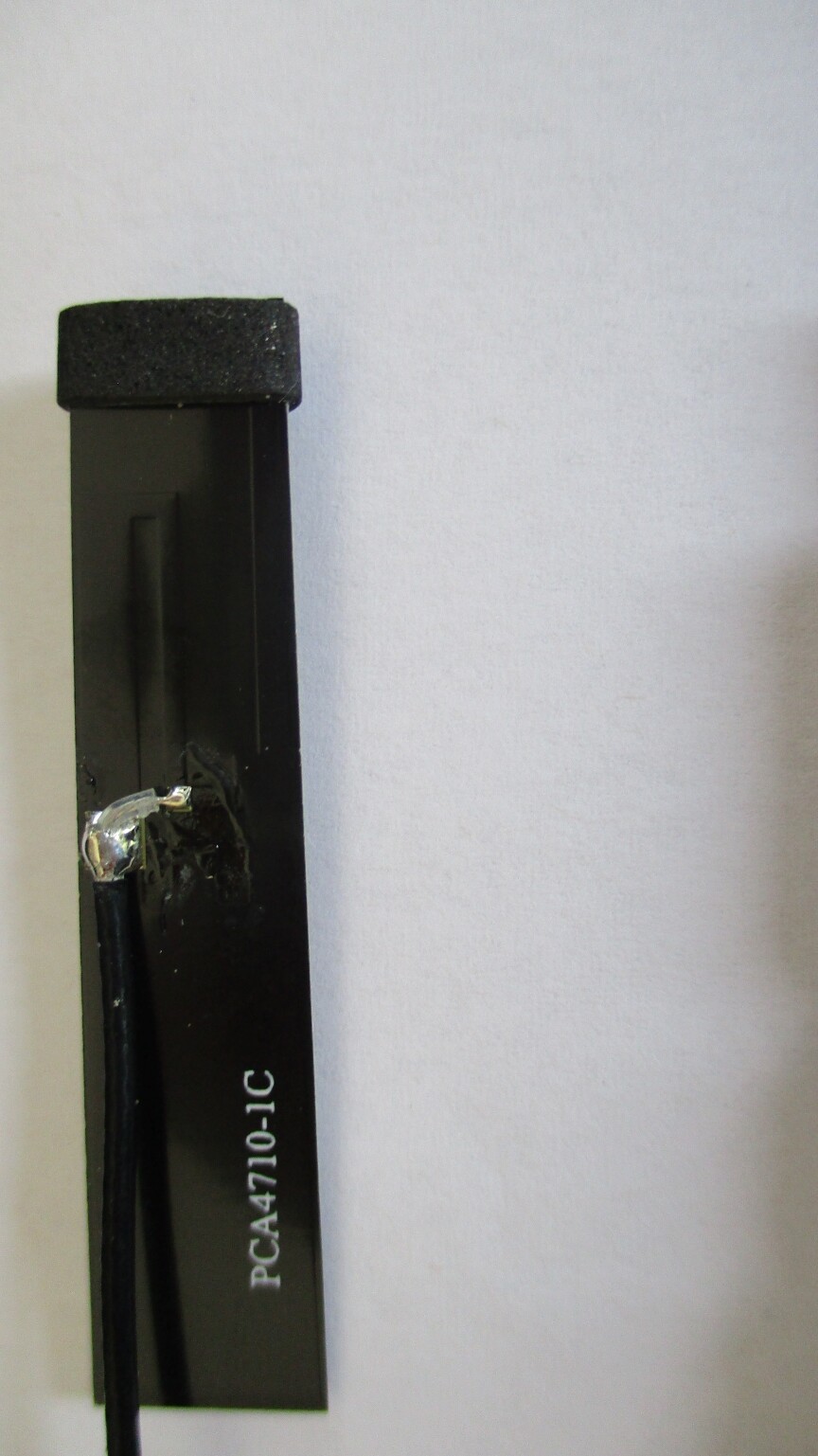
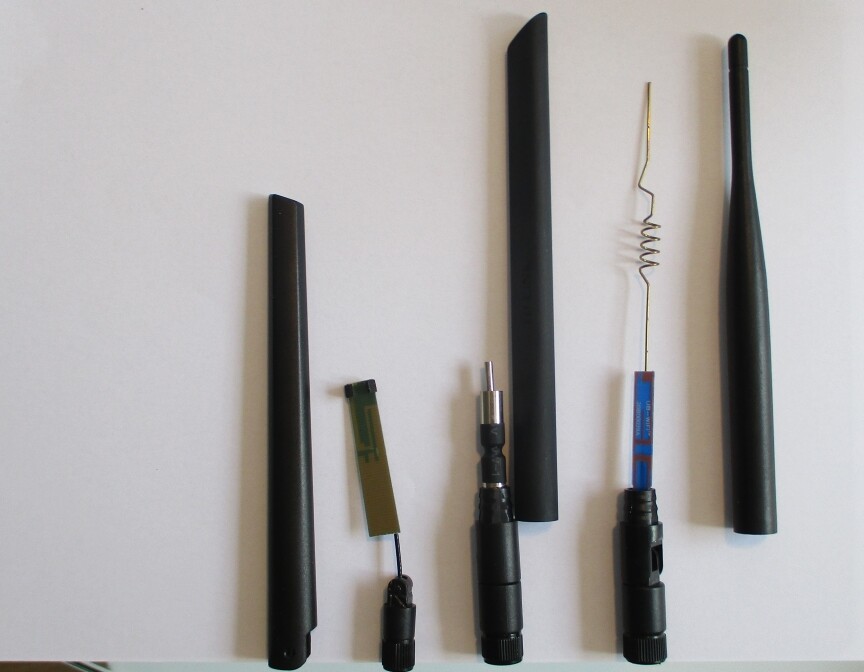
The size of the antenna (not the plastic) matters. The bigger it is, the more directive it is. It allows you to focus the power in one direction/plane better. This effect works both for transmission and for reception in equal measure.
For every doubling of distance, there is a loss of 6 dB of power.
So if you put a 6 dBi antenna on your router, you’ll double the distance.
However, due to EIRP regulations, you’d have to lower the transmission power by 6 dB, negating the transmission power gain.
The only gain you are left with is on reception. You’d be able to receive signals at twice the distance of what you can transmit.
If distance stays the same, you’d just improve the throughput towards the router (your upload speed as seen from an end device).
It gets interesting if you put a 6 dBi antenna on the end device as well, in that case you will effectively double the distance between the two devices as both get a 6 dB boost in reception.
If it weren’t for EIRP regulations, putting a 6 dBi antenna on a router would double your distance, and putting one on an end device (in addition to the router) would double it again, in the end quadrupling the distance.
Unless your are willing to break the law, using bigger antennas on your router will have no effect on coverage, but will just improve your upload speed while download will stay the same.
Another thing is MIMO and beamforming, so the amount of antennas does matter. Generally two antennas will provide 3 dB gain due to beamforming (and only on reception due to EIRP regulations), but due to MIMO will double your throughput. Four antennas will provide a 6 dB gain due to beamforming, and eight will provide a gain of 9 dB.
Again, if you are not willing to break the law, beamforming will not improve coverage, only throughput from the end device towards the AP.
Since there are no end user devices with more than 2 antennas, you are limited to a MIMO of 2x2 per client.
Anything with more than two antennas is only interesting if you are going to pair it with something that also has more than two antennas, like two routers doing a PtP link or some kind of mesh setup.
Having two routers both with 4 antennas, will quadruple throughput due to MIMO and will double the maximum distance due to 6 dB gain in beamforming. If distance stays the same, then the 6 dB of beamforming will improve throughput as well.
TL;DR stick to two antennas unless both ends have more than that.
If it wasn’t for the (needed to avoid risking frying the RF output circuit) needed 50 Ohm impedance, it would be interesting to make experiments with coat hangers, last time they were compared to gold plated cables they came out pretty good: https://www.soundguys.com/cable-myths-reviving-the-coathanger-test-23553/
I’ve seen multiple reports on various posts in this thread during the day.
For now I will let it go but keep things civil, shall we ?
Remember: always play ball, never man.
Yeah, but of course! It’s obvious that the more expensive the cable, the better the quality of the electrons passing through it, which means a better signal – everyone knows that!
OK, after making @rextended mad, let’s go back to roots.
To answer the question: yes, the antenna size does matter. However, it’s not “bigger is better”, it’s rather “the right size matters”. And deterimining “the right size” is not always trivial. For typical indoor coverage, bigger can be actually worse, specially so if there isn’t a rule of directivity (i.e. one wants to cover the floor … and the one above and the one below).
Some indoor coverage scenarios involve directivity, e.g. a large area but no “upper and lower floor coverage” is needed or even wanted, in such cases it’s essential to choose exactly the right antennas (either “high-gain omni” or even directional), but selection is all about exact requirements and can vary between APs (if there are many, placed in different covered area spots). In such scenarios, geometry of antennas placement/orientation also matters … e.g. 2x2 MIMO scenario using “high-gain” dipole antennas … turning those in an angle inevitably means loss of signal of one or both in certain directions where one would want to have coverage … so it’s best to keep both/all antennas vertical in such case … but this OTOH degrades MIMO performance. In case of built-in antennas one has to be very careful to mount the whole device in the right orientation, no WAF excuse should be accepted as it’ll severly degrade coverage in certain areas (and give coverage where it’s not wanted).
Similar for outdoor coverage … and PtP/PtMP scenarios are different again.
Then it’s not only about antenna sizes, for directional antennas it’s also about the looks (this way or another). Often the ugly ones (Yagi, log-periodic) perform much better than the nice looking ones (2x2 MIMO pannel antennas, even dish antennas), quite many of the “handsome” antennas don’t cover wide frequency range well enough, but some vendors tend not to show enough technical data to spot the problems before they actually happen (e.g. vendors don’t publish detailed gain diagrams, they only publish single gain number).
Not, not clearer, just louder. Assume that you are trying to listen to some music on your stereo, but in the next room some construction workers are using heavy tools that make so much noise that they are almost as loud as the music from your stereo. You will not be able to hear the music clearly, because the difference between the volume of the noise and the music does not allow you to differentiate the music clearly from the noise. It’s the difference in volume that makes the music distinguishable from the noise. If both the music and the noise were to gain the same amount in volume the mix of music and noise would just be a lot louder overall, but you will still not be able to better differentiate the music from the noise despite the fact that the db value of the music has increased. That is what your AMP does: it makes the music and the noise louder, and both equally so. The relative difference between them (SNR - signal to noise ratio) remains the same.
In terms of stuff that would matter to you as a consumer, in one-AP setups, external stick antennas are usually better than typical internal antennas. The benefits, I think, are:
They are typically, but not always, higher-gain. This is usually, but not always, a benefit, since it increases the sensitivity of the AP, meaning your phone doesn’t need to scream as loud to get its attention, contributing to either better range with stable connection (packets need to be acknowledged in 802.11), or maybe a little bit of an increase in your phone’s battery life.
They are significantly further away from the actual printed circuit board of the router, which potentially makes it easier for the signal radiating from them not to get blocked by the PCB. Router PCBs are mostly metal, and metal blocks electromagnetic radiation (not accounting for diffraction, of course).
You can adjust external antennas to orient them in a way that gives you maximum performance. (You usually want them in such a position where if you imagine yourself looking at them through walls with your superman x-ray vision, they’re at an angle greater than 30 degrees to each other, for every position you could be in while connected to the router)
External antennas are sometimes replacable, and that’s just plain nice in this depressing world where everything is increasingly made to last 1 year exactly and not be repairable after it breaks.