A long whole ago, after replacing my previous outdated draft-n WiFi router with the Mikrotik hAP ac we noticed that the Mikrotik had a much less “powerful” WiFi signal, and sometimes we were losing connectivity even while within 5 meters (1 floor higher, Mikrotik close to ceiling of floor below) of the access point. After a lot of Googling around I noticed I was not the only one getting a “weak” signal, and I ended up disabling 5GHz WiFi which improved the WiFi connection stability, but not the range.
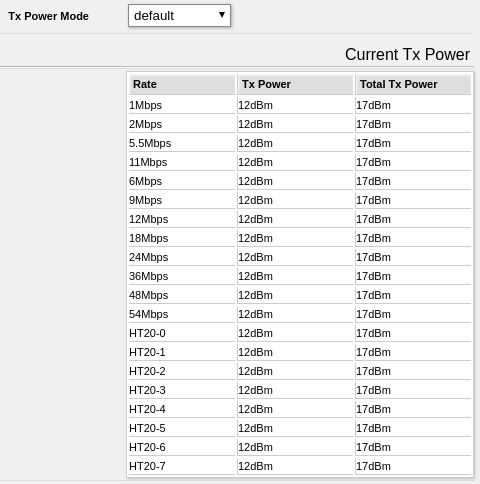
Today, before upgrading the firmware of my hAP ac, I read the changelogs and found some changes had been done on WiFi stability. After applying the update I again started playing around with the settings on the 2.4GHz interface. I found that when I unset the country, switch to manual TX power, but keep the antenna gain and other settings the same, suddenly my WiFi range improves and I no longer have an issue connecting to the WiFi from our second floor. How is it possible to see such a difference even though antenna gain is not changed, frequency is not changed, and manual TX power settings are not changed? If the manual TX power table doesn’t reflect actual TX power when regulatory domain is configured, how can we see actual TX power?
Initial settings:
name=“wlan1” mtu=1500 l2mtu=1600 mac-address= arp=enabled disable-running-check=no interface-type=Atheros AR9300 radio-name= mode=ap-bridge ssid= area=“” > frequency-mode=regulatory-domain country=belgium installation=indoor antenna-gain=3 > frequency=2452 band=2ghz-g/n channel-width=20mhz secondary-channel=“” scan-list=default wireless-protocol=802.11 rate-set=default supported-rates-b=1Mbps,2Mbps,5.5Mbps,11Mbps supported-rates-a/g=6Mbps,9Mbps,12Mbps,18Mbps,24Mbps,36Mbps,48Mbps,54Mbps basic-rates-b=1Mbps basic-rates-a/g=6Mbps max-station-count=2007 distance=indoors > tx-power-mode=default > noise-floor-threshold=default nv2-noise-floor-offset=default vlan-mode=no-tag vlan-id=1 wds-mode=disabled wds-default-bridge=none wds-default-cost=100 wds-cost-range=50-150 wds-ignore-ssid=no update-stats-interval=disabled bridge-mode=disabled default-authentication=yes default-forwarding=no default-ap-tx-limit=0 default-client-tx-limit=0 wmm-support=disabled hide-ssid=no security-profile=default wps-mode=disabled station-roaming=enabled disconnect-timeout=3s on-fail-retry-time=100ms preamble-mode=both compression=no allow-sharedkey=no station-bridge-clone-mac=00:00:00:00:00:00 ampdu-priorities=0 guard-interval=any ht-supported-mcs=mcs-0,mcs-1,mcs-2,mcs-3,mcs-4,mcs-5,mcs-6,mcs-7,mcs-8,mcs-9,mcs-10,mcs-11,mcs-12,mcs-13,mcs-14,mcs-15,mcs-16,mcs-17,mcs-18,mcs-19,mcs-20,mcs-21,mcs-22,mcs-23 ht-basic-mcs=mcs-0,mcs-1,mcs-2,mcs-3,mcs-4,mcs-5,mcs-6,mcs-7 tx-chains=0,1,2 rx-chains=0,1,2 amsdu-limit=8192 amsdu-threshold=8192 tdma-period-size=2 nv2-queue-count=2 nv2-qos=default nv2-cell-radius=30 nv2-security=disabled nv2-preshared-key=“” nv2-mode=dynamic-downlink nv2-downlink-ratio=50 nv2-sync-secret=“” hw-retries=7 frame-lifetime=0 adaptive-noise-immunity=none hw-fragmentation-threshold=disabled hw-protection-mode=none hw-protection-threshold=0 frequency-offset=0 rate-selection=advanced multicast-helper=default multicast-buffering=enabled keepalive-frames=enabled
Allowed channels:
channels: 2412/20/gn(17dBm),2417/20/gn(17dBm),2422/20/gn(17dBm),2427/20/gn(17dBm),2432/20/gn(17dBm),2437/20/gn(17dBm),2442/20/gn(17dBm),2447/20/gn(17dBm),2452/20/gn(17dBm),2457/20/gn(17dBm),2462/20/gn(17dBm),2467/20/gn(17dBm),2472/20/gn(17dBm)
Manual TX power table:
name="wlan1" manual-tx-powers=1Mbps:17,2Mbps:17,5.5Mbps:17,11Mbps:17,6Mbps:17,9Mbps:17,12Mbps:17,18Mbps:17,24Mbps:17,36Mbps:17,48Mbps:17,54Mbps:17,HT20-0:17,HT20-1:17,HT20-2:17,HT20-3:17,HT20-4:17,HT20-5:17,HT20-6:17,HT20-7:17,HT40-0:17,HT40-1:17,HT40-2:17,HT40-3:17
,
                 HT40-4:17,HT40-5:17,HT40-6:17,HT40-7:17
Modified settings:
name=“wlan1” mtu=1500 l2mtu=1600 mac-address= arp=enabled disable-running-check=no interface-type=Atheros AR9300 radio-name= mode=ap-bridge ssid= area=“” > frequency-mode=manual-txpower country=no_country_set installation=indoor antenna-gain=3 > frequency=2452 band=2ghz-g/n channel-width=20mhz secondary-channel=“” scan-list=default wireless-protocol=802.11 rate-set=default supported-rates-b=1Mbps,2Mbps,5.5Mbps,11Mbps supported-rates-a/g=6Mbps,9Mbps,12Mbps,18Mbps,24Mbps,36Mbps,48Mbps,54Mbps basic-rates-b=1Mbps basic-rates-a/g=6Mbps max-station-count=2007 distance=indoors > tx-power-mode=default > noise-floor-threshold=default nv2-noise-floor-offset=default vlan-mode=no-tag vlan-id=1 wds-mode=disabled wds-default-bridge=none wds-default-cost=100 wds-cost-range=50-150 wds-ignore-ssid=no update-stats-interval=disabled bridge-mode=disabled default-authentication=yes default-forwarding=no default-ap-tx-limit=0 default-client-tx-limit=0 wmm-support=disabled hide-ssid=no security-profile=default wps-mode=disabled station-roaming=enabled disconnect-timeout=3s on-fail-retry-time=100ms preamble-mode=both compression=no allow-sharedkey=no station-bridge-clone-mac=00:00:00:00:00:00 ampdu-priorities=0 guard-interval=any ht-supported-mcs=mcs-0,mcs-1,mcs-2,mcs-3,mcs-4,mcs-5,mcs-6,mcs-7,mcs-8,mcs-9,mcs-10,mcs-11,mcs-12,mcs-13,mcs-14,mcs-15,mcs-16,mcs-17,mcs-18,mcs-19,mcs-20,mcs-21,mcs-22,mcs-23 ht-basic-mcs=mcs-0,mcs-1,mcs-2,mcs-3,mcs-4,mcs-5,mcs-6,mcs-7 tx-chains=0,1,2 rx-chains=0,1,2 amsdu-limit=8192 amsdu-threshold=8192 tdma-period-size=2 nv2-queue-count=2 nv2-qos=default nv2-cell-radius=30 nv2-security=disabled nv2-preshared-key=“” nv2-mode=dynamic-downlink nv2-downlink-ratio=50 nv2-sync-secret=“” hw-retries=7 frame-lifetime=0 adaptive-noise-immunity=none hw-fragmentation-threshold=disabled hw-protection-mode=none hw-protection-threshold=0 frequency-offset=0 rate-selection=advanced multicast-helper=default multicast-buffering=enabled keepalive-frames=enabled
Allowed channels (limit of 17dBm no longer shown):
channels: 2412/20/gn,2417/20/gn,2422/20/gn,2427/20/gn,2432/20/gn,2437/20/gn,2442/20/gn,2447/20/gn,2452/20/gn,2457/20/gn,2462/20/gn
Manual TX power table prints exactly the same as with original settings.