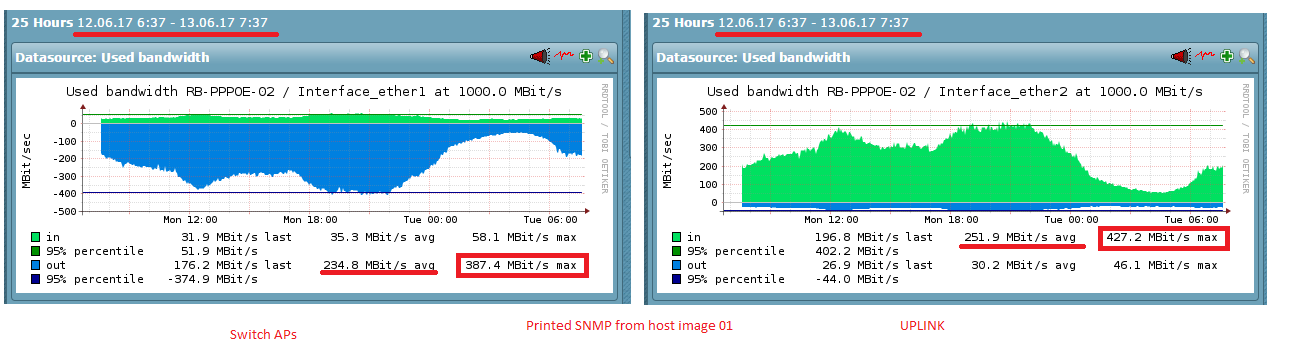
I have a doubt while ago, consumption from the uplink interface are not the same with the interface that goes to the clients on pppoe server.
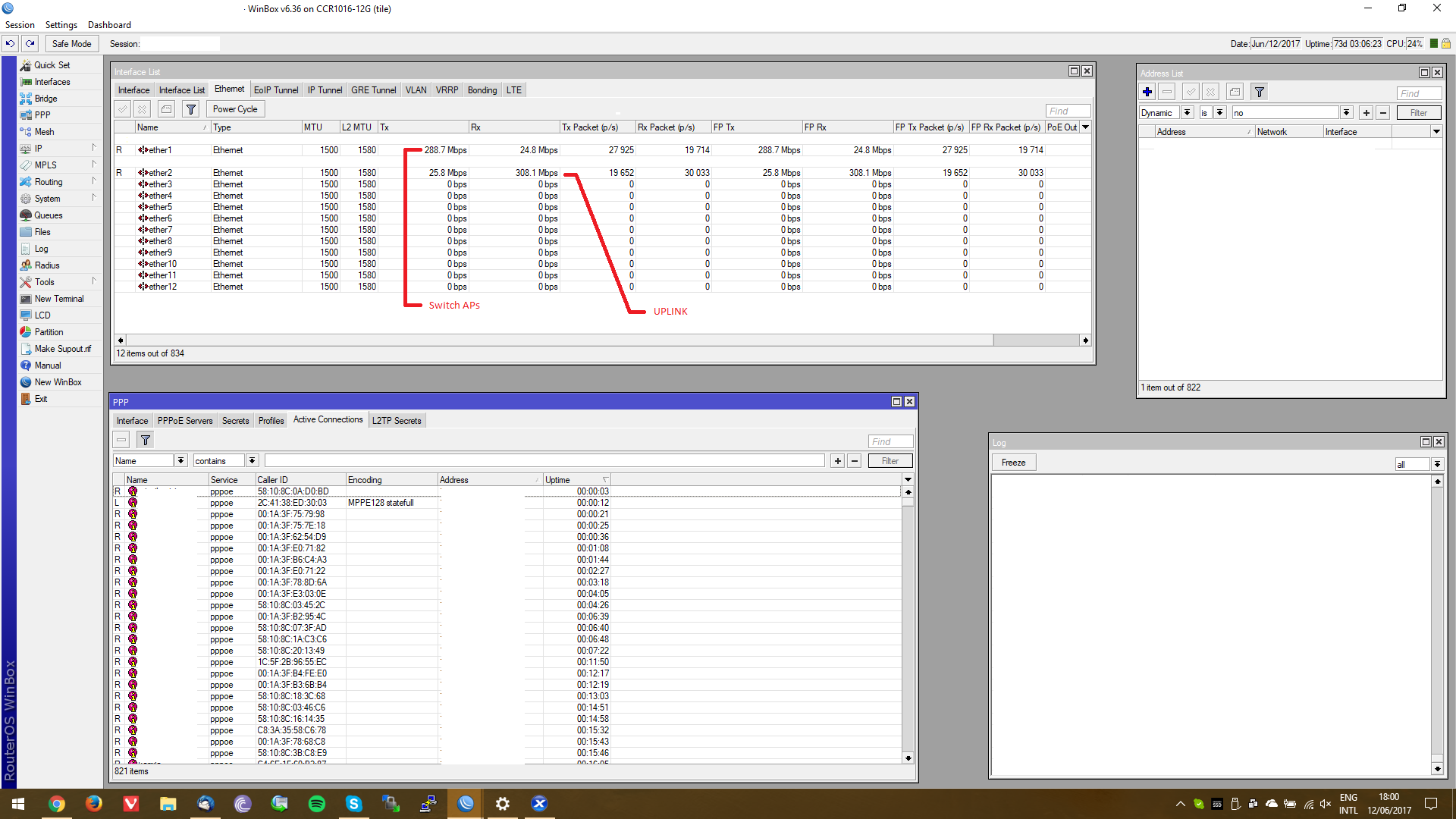
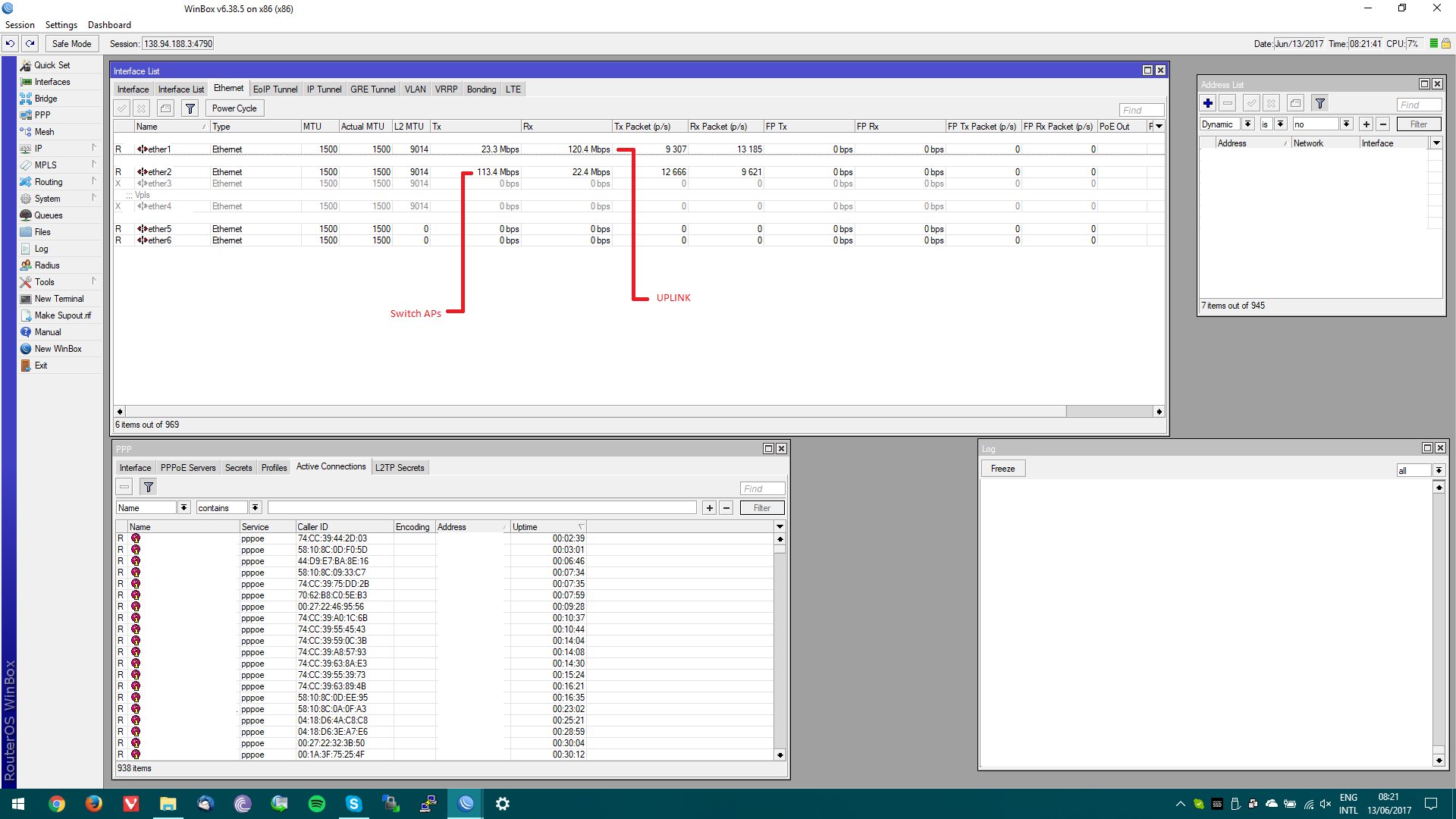
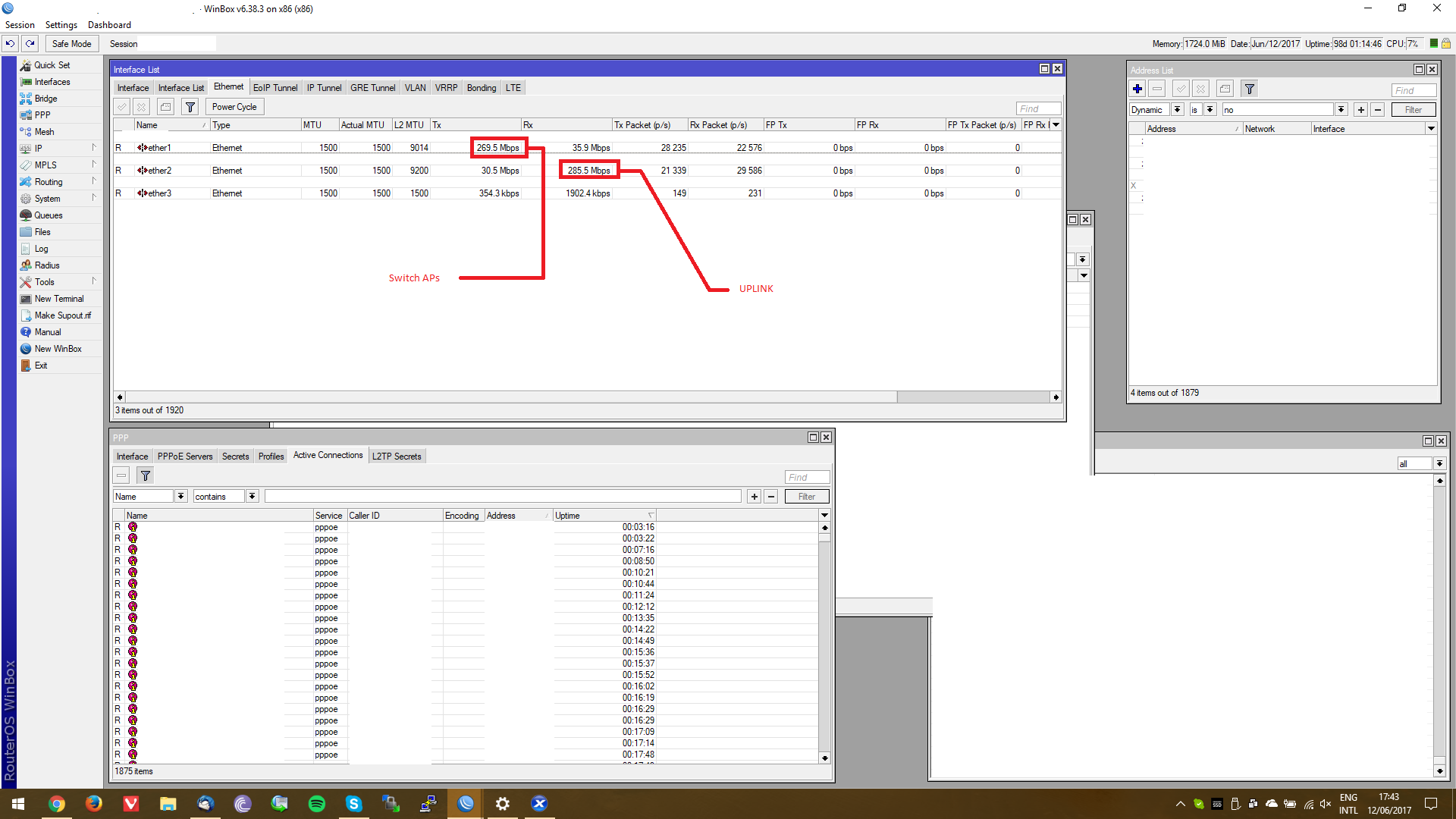
Images 01 ~ 03, printed from winbox
No OVPN, PPTP, L2TP, etc, services running on this servers, they are all pppoe server only. No strange traffic incoming or outcoming visible on torch, checked multiple times. This 3 servers are not all, we have more server with the same situation.
I have no idea about the 10%… I think it could be. I’m fairly certain your issue is the additional encapsulation for PPPoE though. If memory serves me correctly, you’re looking at 20 or 28 bytes per packet extra.
It really depends on your MTUs, whether there’s other encapsulations evolved (VLANs, EoIP/VPLS / etc), average packet size your customers transmit / received, etc. It get’s complicated… Very complicated.
Take the amount of packets per second * 20 bytes per packet for PPPoE * 8 to convert the Bytes to Bits. Add those bits (bits/1024/1024 to make them Mbps) to your Interface Mbps, and see how close you get in terms of the difference between the two. If you’re relatively (95 % odd) close to the same, then that’s definitely your issue (again, assuming there’s no other encapsulation involved, but it doesn’t look like there is)…
IMHO, the difference isn’t that significant that I personally would be concerned here. If you can post interface stats for both interfaces, showing Mbps and PPS, we could do some calculations, but PPS becomes more important here than Mbps. You should also see the PPS on the two interfaces will be far closer than the same on both interfaces, instead of the Mbps.
EDIT: Oh wait. I’m daft. I see the stats ARE there (PPS).
EDIT2: And in terms of PPS, queueing and packets being dropped by the queues could also affect this.