Hello everyone! I wanted to report, after first reporting to my supplier, of the problems that I having and I had with RBGESP. I mounted a dozen on 5 pylons and at the first rain they filled up with water. Obviously the PoE went short by blocking the power supply and in one case also resetting the radio. I state that they have been mounted as per the instructions with the arrows facing upwards and the input of the network cable from below. Here are some photos to help you understand the damage.
has it happened to someone or is it just my bad luck? Sorry for my bad english
we have same issues. just now we have replaced second RBGESP. flooded with water. so i guess there must be another protection for this protection RBGESP
Had the same issue today, sector went down last night and I drove to site with replacement wireless card but found that the gesp had water ingress and corrosion had set in on the pins.
The grommet seems to trap the water once it gets in, this is not good as I have quiet a few of these in operation.
Thanks everyone for sharing your experiences with the RBGESP.
Unfortunately, I’ve now experienced the same issue. Two of these mounted externally, connected to a wAP ac LTE6 device. Lost signal on one cable… it was constantly trying to auto-negotiate at 10Mbps then 100Mbps but completely unstable.
Ventured outside and removed the bottom half of the surge protector unit and unplugged the cable. Managed to see some moisture at the back of the downward facing socket. Also noticed some corrosion to three of the contacts at the end of the RJ45 plug which was inside it.
Given that the RBGESP was installed the right way up, the presence of moisture at the back of the RJ45 socket (uppermost part, as it is pointing down) leads me to believe the water came in from the top, where the where the small captive Ethernet cable and earth lead emerge.
I replaced the failed RBGESP with another one, but will try to prevent it happening to either the second existing unit or the new unit but first sealing the circumference of the rubber boot at the top, using a hot glue gun. I then plan to wrap self-amalgamating tape around both the top cable entry point as well as around the middle, to properly seal the two halves of the unit and better protect against ingress of water.
After reading the comment about the bottom rubber grommet stopping any drainage of water, I wonder if I should wedge something in next to the cable, to provide a small escape for liquid… But to start with, I plan to mummify the units in self-amalgamating tape…
Same thing. It got flooded, turned green, and stopped responding. I temporarily removed the surge protector, and LHG is working. At least it didn’t die.
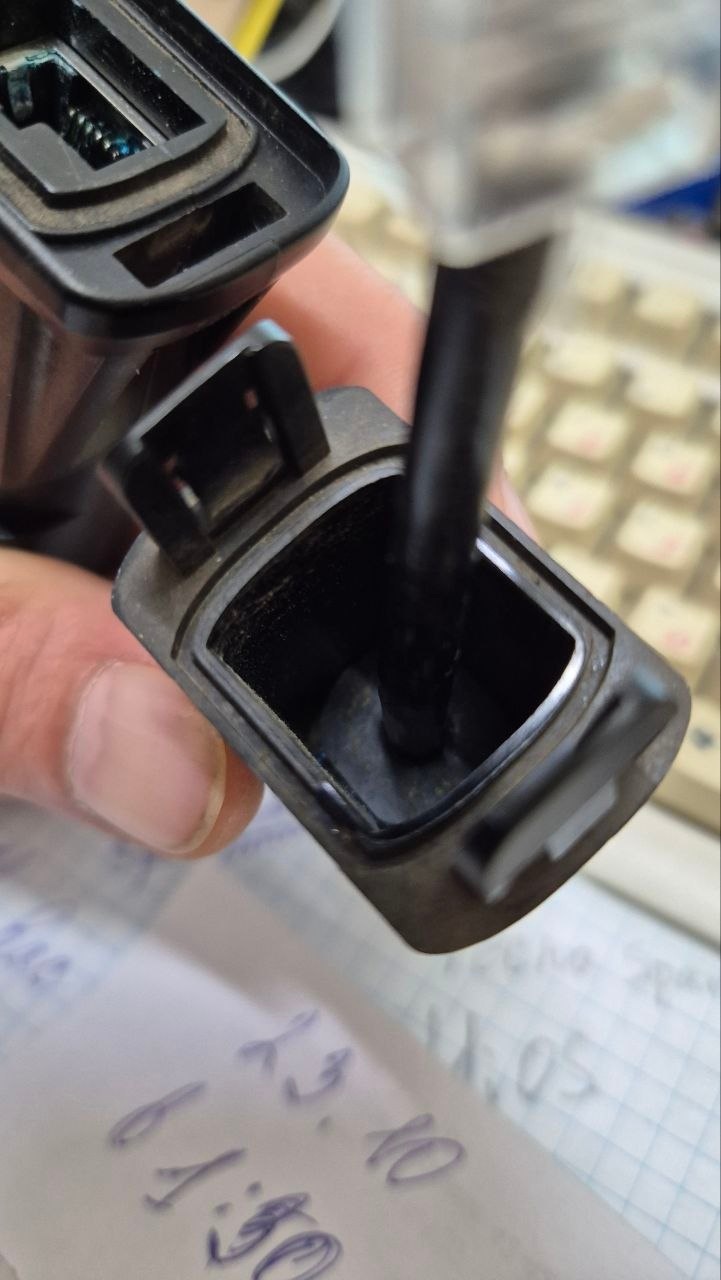
If you look at the photo, you’ll see that the rubber seal is completely covered in dust. This means that when the housing is closed with latches, the seal doesn’t come into contact with the mating part. And since a dense rubber seal is installed at the bottom of the cable outlet, the housing will simply fill with water over time.
Compression gaskets (like the ones on the photo) are only good if they are compressed (i.e. the cover is bolted/screwed) these "snap in" latches may (or may not) provide the right contact/pressure, we are talking of hundreds of mm, or the rubber itself may slightly decrease in thickness over time.
But, even if some external sealing is applied, it is IMHO not enough.
Everyone has his/her own theory on this, mine is that without a vent hole a completley sealed whatever needs to be sealed in a controlled environment (which the top of a pylon/antenna rarely is) otherwise some humidity gets inside the device anyway when you install it.
So, what I would do, would be to wrap the thingy with self-amalgamating tape or similar AND drill a small hole near the bottom.
Ideally threading the hole and placing a vent valve would be even better.
Which is what the good Mikrotik guys did on newish releases of the Cubes, see: