Isn't wifi constantly monitoring environment to check/avoid "something" just to obey WiFi7 rules, what makes device always busy?
All WiFi6 and WiFI7 devices run hot, this is expected and already thought of in the case design already. Unfortunately, this speed comes at a cost, this is new reality.
Agree, and also some dark marks on ceilings under those devices 
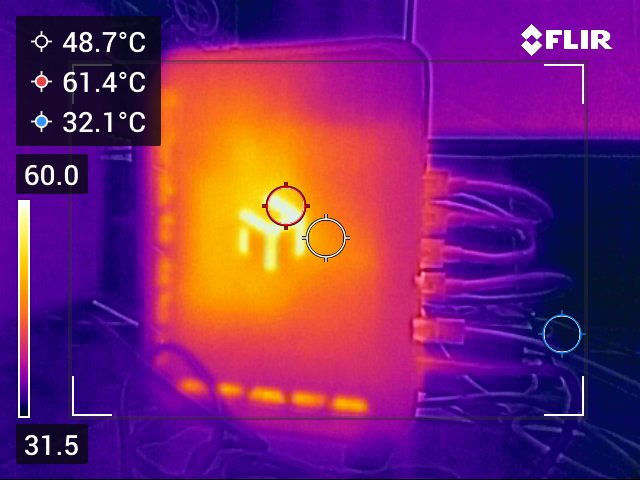
But we all know that one of the main factors that determines the lifetime of electronic devices is their operating temperatures, if it is confirmed that the device runs (idle) as hot as in the flir image shared by klayf, adding an external USB fan as he did seems like a very sensible mod.
NO if you prevent it

Those devices and their chips are designed with this in mind. What you write is mostly for situations where a component runs hotter than it's designed for.
Looking at the Flint 3 which uses a similar SoC (and I assume also similar co-processors), the reported idle temps are indeed about the same. That said, unlike the hap be3; it does come with a fan which kicks in when needed.
I'm still waiting for my units to arrive to test it for myself, but given that I live in a hot country - it seems like modding it to include active cooling would likely to be mandatory in my case.
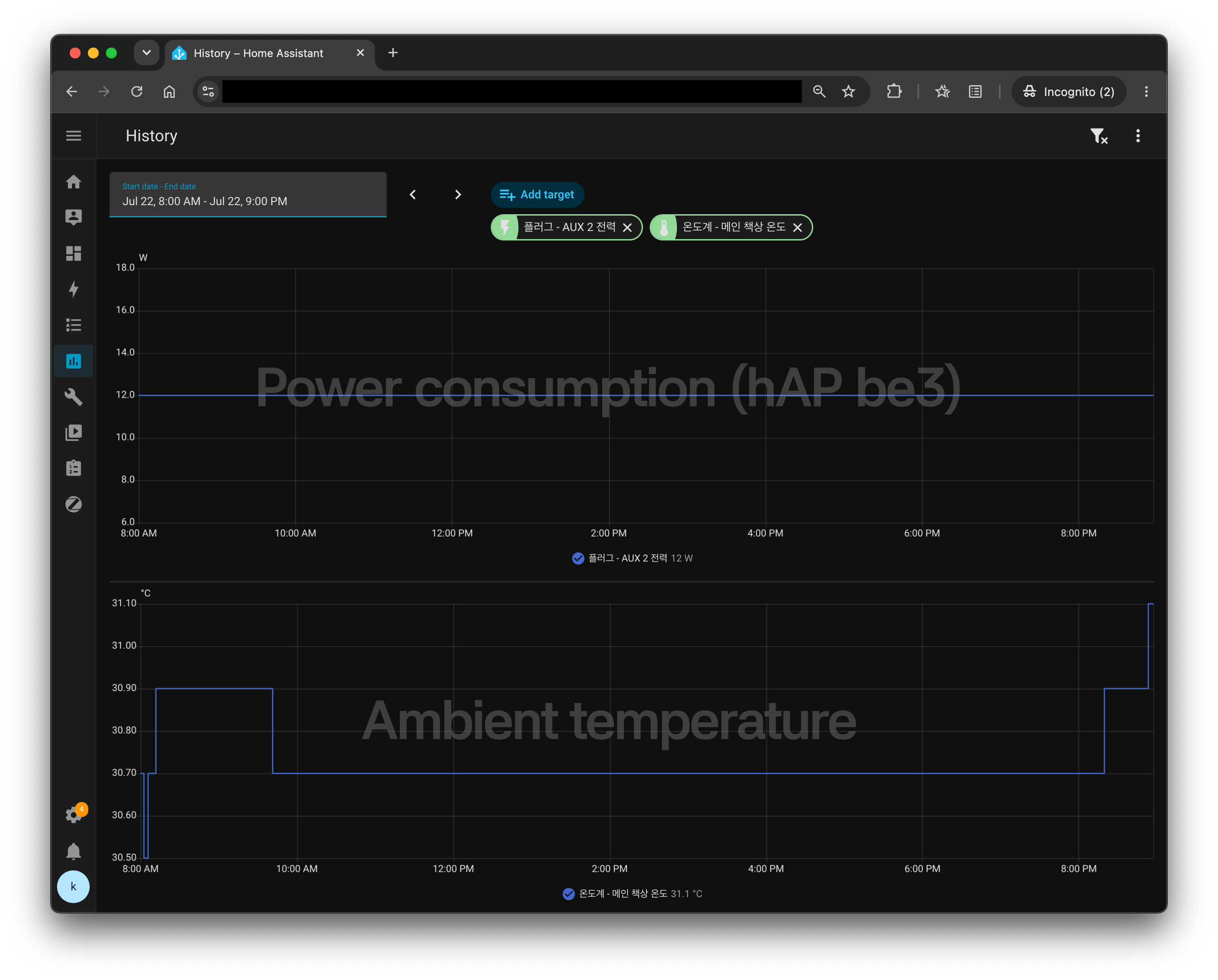
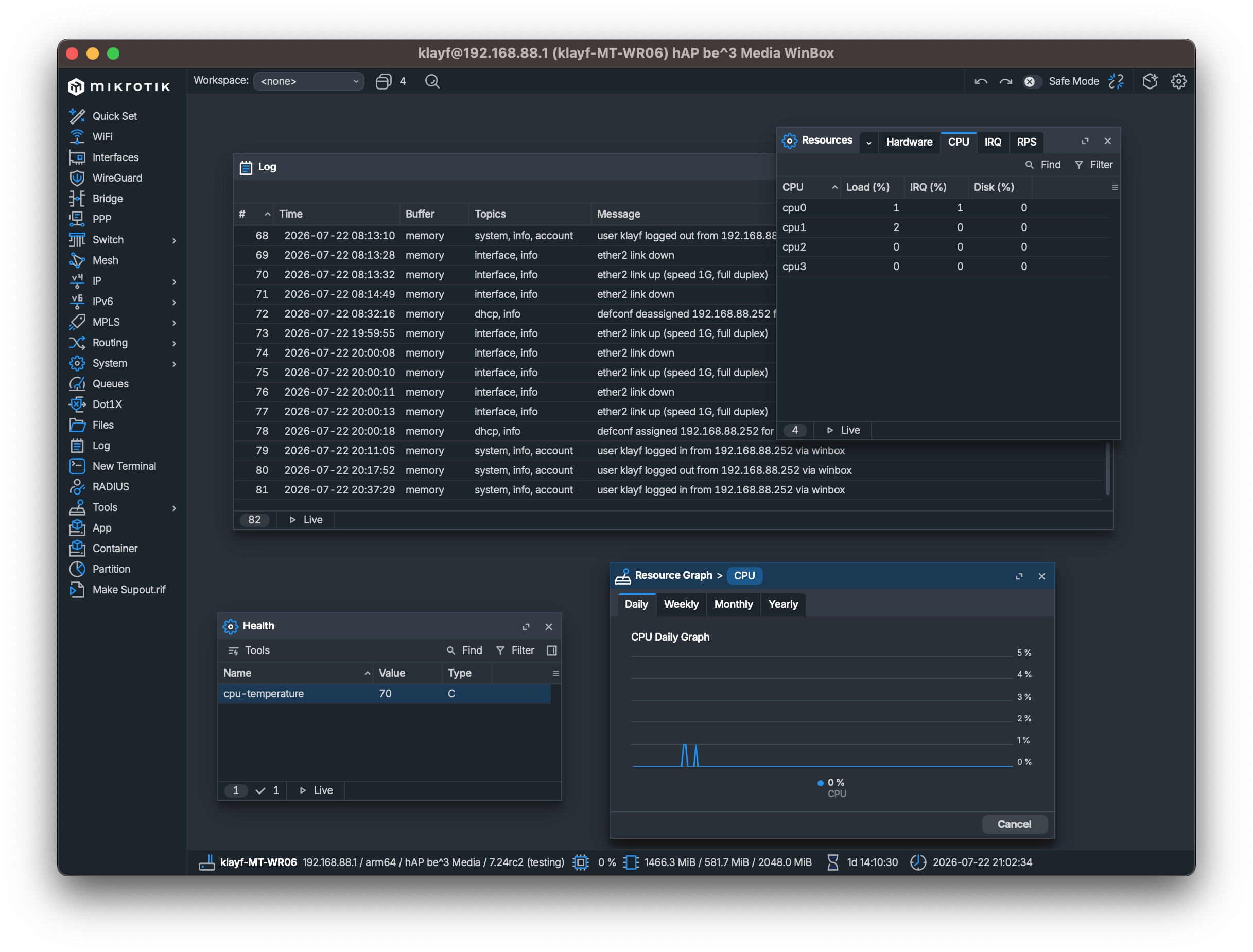
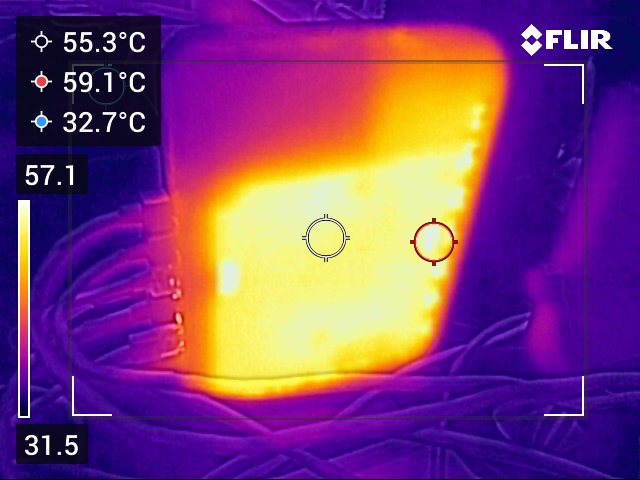
The attached image shows the results from 8:20 AM, around the time I left for work, until 9:00 PM, when I measured the router surface with a thermal camera after returning home; during this time, the router was in an idle state.
- Power supply method: PoE -> Barrel jack (using a 24V 1.5A adapter)
- Connected cables: 1 WAN only (2.5G), all LAN devices turned off, no Wi-Fi clients
Power consumption was measured at 12W via the smart plug. Although accuracy decreases at low currents, the result was not significantly different from the power reported by the PoE switch.
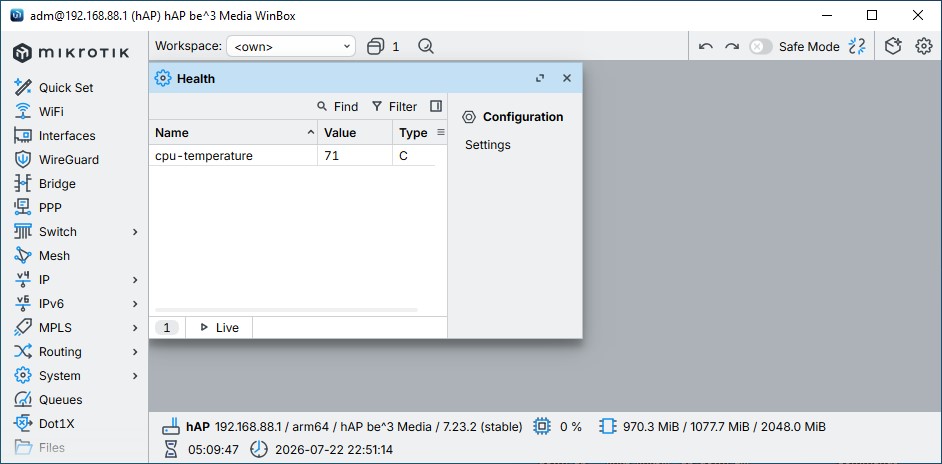
The ambient temperature around the router was approximately 30-31C, and the CPU temperature was displayed as 68-71C.
Although the ambient temperature increased compared to before, the CPU temperature dropped by nearly 6-7C.
*I still think the router is on the hotter side, but this is a fairly significant difference.
Conclusion: Powering with PoE makes the be3 hotter. I recommend using a DC adapter.
PoE @24V or PoE @48V?
The latter might help in making the device significantly hotter, if - as I believe - everything is
internally "buck converted" to low voltage like 5 V or so.
So IMHO it's a good device for winter time. AP + heater in one box small enough to hold it in cold hands. 

Thats what I also had in mind.
Either that, or to 3D print a new top cover with a laptop-style fan directed into the plastic grill.

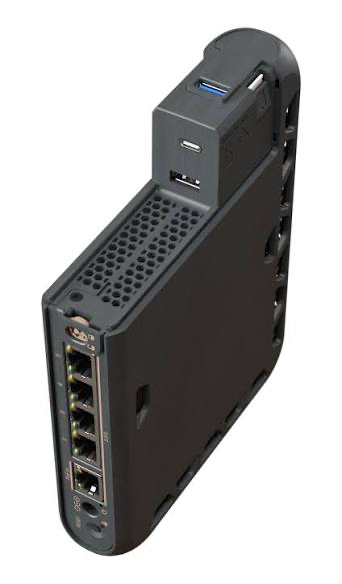
As for power, I don't know if the USB ports support power delivery, but it may be possible to deliver 12v if it does. Even better solution would be to be able to read the temps over USB and have a small microcontroller to control the speed accordingly.
In the meanwhile, my shipment seem to be stuck somewhere in Europe with no new updates in last 6 days, hope it'll eventually show up....
Maybe it's better to print a case that could accomodate new passive heatpipe solution after removing old radiator, to have fanless router?

Are you sure that WiFi would work with no glitches as bubbles could interfere?

 ...
...
Does anyone dare to stress the device? https://hub.docker.com/r/polinux/stress
I would like to do it... And I will do it once i get my hands on it...
I will try to put something like this fan just to see if temps drops to something reasonable.
Maybe replace thermal paste with something better...
I wonder if anyone can look at the idle core frequencies.
If they are always pegged high (>=1Ghz) it simply means that RouterOS scheduler was implemented without any real consideration to the SoCs architecture.
Basically, how it should normally work is by under clocking the cores on idle and wait for interrupts from the co-processors. Once interrupted - it would instantly spin up the cores for processing, unless of course it's offloaded.
It also doesn't help that this SoC use the generic, inefficient A53 cores, nor the fact that the manufacturing process uses old 14nm nodes.