On paper it looked very good, but in reality it looks like a real problem . . . lower performance/range on 5GHz, high consumption, high temperature even when doing nothing, microSD not working (so far) . . . I'm starting to have doubts about the correctness of the order . . .
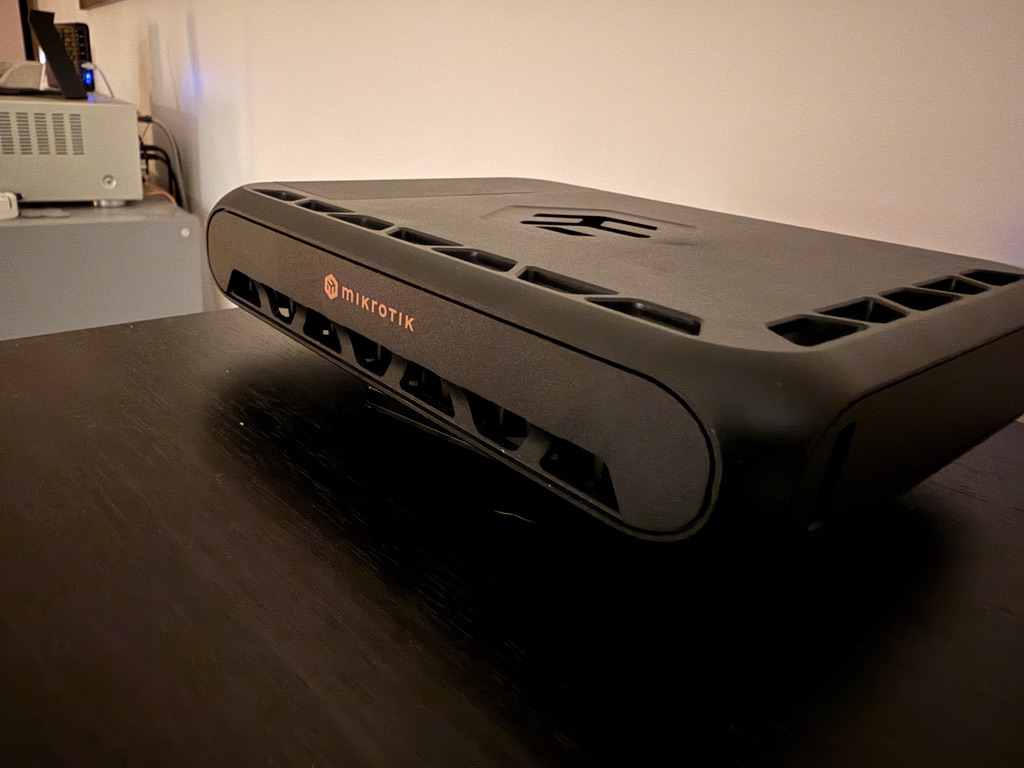
It's not because you're from MikroTik. It's more that outdoor temperatures where you are apparently do not even reach 30°C in summer. The first person to install this unit in Sicily may have a different experience. 
It weighs 800 grams!
We don't have of course enough data to plot a curve similar to the one I posted here:
but I stand by my rough estimate that a device (at idle) should be around:
Ambient temperature + 20°
This thingy appears to be instead:
Ambient temperature + 40°
And I will repeat that IF the above is accurate, within the declared supported ambient temperature of 50° the thingy would be 90° idle (and probably cutoff at 95°).
Not that in Sicily it is common to have 50°, but I can testify (summer of 1983, an exceptional summer, an early sign of global warming, blah, blah) that we touched 46° in Catania.
But 38/39/40° happen rather often in summer and if you have a device in an attic, 50° is to be expected.
No, this is not an early sign of global warming. It is more likely an unusual exception.
A clearer sign of global warming is what I see where I live, near the Alps. In the past, we had plenty of snow and water. For the last ten years, however, winters have been very dry, and snow has become something we mostly see in picture books. The water situation is becoming critical. So don't get me started on that topic.
That’s not how quality assurance works though.
You don’t just test it under perfect conditions, but rather need to stress test the limits of the device under different environments. This is why many manufacturers have environmental chambers - to mimic different environmental conditions and to ensure the device is capable of normal operation worldwide, or at the very least - put out a warning for those who live in harsher environments.
I am middle eastern. The temps here are far higher than what you’d normally see in Latvia, and I am like many others justifiably concerned.
MikroTik apparently does ambient testing as well.
https://mikrotik.com/product/hap_be3_media
Tested ambient temperature -30°C to 50°C
But their reliability test was only done under 25C.
You means
MTBF Approximately 200'000 hours at 25C
?
Indeed. There are no metrics at 30C nor 35C.
Would it start dropping packets more often? I don’t know.
was this product vibe-coded / vibe-engineered? 
Your +20/+40 theory holds up perfectly.
If you look at the specs for the hEX refresh/hEX S 2025/hAP ax S, those are rated to 70 C ambient and this one to 50 C.
Anyway, to all the worriers: it will hold up in normal indoor circumstances for which it was designed. Mikrotk can actually design hardware.
No, it was not designed to be placed in a closed box in direct sunlight, nor for the attic. If you plan for prolonged use at or beyond its rating, get a small USB fan.
No test was done for MTBF, MTBF is by definition an estimate based on some math.
Of course not, Product is designed to operate with a hot CPU, this is normal.
I need to defend Mikrotik a little bit. I have UGC Max at my parents house and it's also a hot running device, 75-80 is normal.
At least be3 have ventilation holes while UGC Max doesn't have any form of ventilation...
It will be interesting to see how long it will last with such high operating temperatures.
According to a little research the ucg max seems to have a little fan inside. It is apparently possible to control the fan speed. I also found reddit posts where users report temperature drop to around 40-50°c after some software update.
Seems like you guys miss the point.
It’s not about idle high temps (though, I’d still guess the cores are likely pegged at high frequencies for no reason), but rather wether there’s enough head room to sustain high load without throttling, which for a device advertised as tailored for running containers is pretty critical imo.
Another point which I already mentioned above is most of the devices using the high end SOCs of the Miami family come with a built in fan, which I assume is mostly useful at load.
Whether this is a real problem or not - we won’t know till real word tests are conducted. But a I wouldn’t accept a “trust me bro” response without hard evidence.
Either way I’m still eager to get my units delivered to test this on my own, and I don’t mind adding a small fan if needed. I just really hope my package won’t get delayed due to war with Iran..
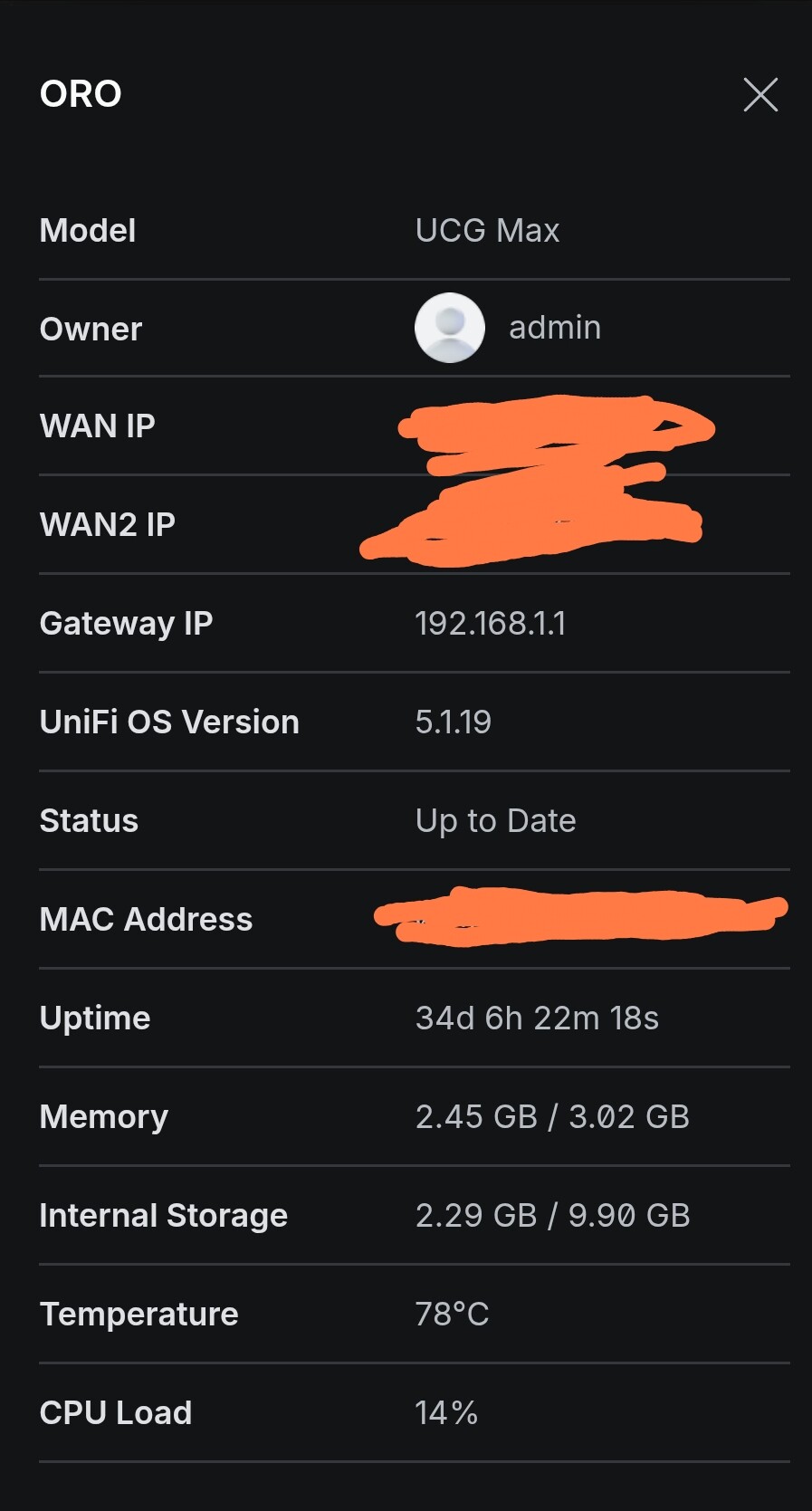
There's something I'm really curious about, so if anyone has datav to share (or is willing to do some experiments)
I've measured the power consumption of quite a few Mikrotik devices, and I've found only miniscule differences between loaded and unloaded states, or when idle between when adaptive cpu frequency control was enabled and when I locked it to the highest reasonable frequency.
To me this makes sense, because basically all power hungry circuitry still does the same work. WiFi still has to listen (so DSP circuitry is fully active) and it's only the power amplifier that can save some power, but that really doesn't consume much... With regard to the CPU, even, frquency scaling only yield dramatic results if voltage is also scaled, which is not usually implemented.
Mostly, the only place where I would imagine a significant power difference is on switches based on how many interfaces are active.
Does anyone have any actual data?